
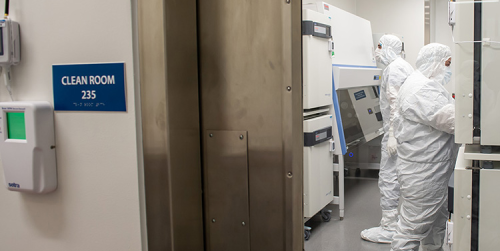
Top 5 SOPs Every Cleanroom Must Have
Every cleanroom, regardless of its class or industry, is only as good as the discipline with which it is operated. While engineering design, HVAC systems, and HEPA filtration define the hardware of contamination control, Standard Operating Procedures (SOPs) define the software — the human and procedural element that keeps the environment consistently compliant.
Whether you’re managing an ISO 5 microelectronics facility, an ISO 7 pharmaceutical filling room, or an ISO 8 EV battery assembly area, SOPs form the backbone of cleanroom governance.
They ensure that every person entering, every material handled, and every operation executed follows a validated, repeatable process — minimizing variability and risk.
In this article, we’ll discuss the top five essential SOPs that every cleanroom must have, their rationale, and how they align with ISO 14644 and GMP best practices.
- SOP for Gowning and Entry Procedures
Purpose:
To control contamination from personnel — the single largest source of particles and microorganisms in clean environments.
Why It’s Critical
Even trained operators can shed millions of particles per minute through skin flakes, hair, and movement. Improper gowning or entry behavior can instantly compromise a cleanroom’s ISO class.
A well-drafted gowning SOP establishes a one-way flow of personnel, proper donning sequence, and behavioral discipline.
Key Components
- Zoning: Clearly demarcated areas (street clothes → gowning → buffer → cleanroom).
- Step-by-Step Donning Order:
Hair cover → mask → inner gloves → coverall → boots → goggles → outer gloves. - Material & Garment Control:
Use of lint-free garments, regular laundering (validated cycles), and rejection of damaged suits. - Entry Behavior:
- No talking, chewing, or abrupt movements.
- Disinfection of hands between glove layers.
- Mandatory air shower (if applicable).
- Exit Procedures:
De-gowning sequence to prevent contamination carry-over.
Documentation
Logbooks or digital access systems should track personnel entry, gowning verification, and gown usage history.
Periodic gowning qualification tests (particle shedding tests, visual audits) must be documented.
- SOP for Cleaning and Disinfection
Purpose:
To maintain cleanliness by systematically removing contaminants and microbial loads from surfaces, floors, walls, and equipment.
Why It’s Critical
Even in highly filtered environments, particles and microorganisms settle over time.
Without a consistent cleaning regime, microbial and particulate build-up can breach cleanliness limits and affect product quality or research integrity.
Key Components
- Cleaning Frequency:
- Daily: Work surfaces, floors, and door handles.
- Weekly: Walls, ceilings, light fittings.
- Monthly: Complete cleanroom shutdown and deep clean.
- Approved Cleaning Agents:
- Detergents for general cleaning.
- Disinfectants (e.g., IPA 70%, hydrogen peroxide, or quaternary ammonium compounds).
- Rotation policy to prevent microbial resistance.
- Cleaning Tools:
- Lint-free wipes, cleanroom mops, and dedicated color-coded buckets.
- Tools sterilized and stored within the clean zone.
- Technique:
- Top-to-bottom, clean-to-dirty direction.
- Overlapping, unidirectional strokes.
- Two-bucket system (detergent + rinse).
Documentation
Every cleaning activity must be logged — with date, time, operator name, area, and agent used.
Environmental monitoring results (settle plates, swabs, particle counts) must correlate with cleaning frequency.
- SOP for Material and Equipment Transfer
Purpose:
To prevent contamination during the movement of materials, samples, and tools between classified and non-classified areas.
Why It’s Critical
Uncontrolled material transfer is one of the most common causes of cross-contamination.
Even well-gowned operators can unknowingly bring in dust, packaging debris, or microorganisms if material flow isn’t standardized.
Key Components
- Material Airlocks (MALs):
Two-door systems ensuring only one door opens at a time. - Transfer Protocols:
- Outer packaging removed in gray zone.
- Wipe down with IPA or disinfectant before entry.
- Inner packaging opened only inside the clean zone.
- Flow Segregation:
Distinct paths for personnel, material, and waste.
(No crossover between clean and dirty zones.) - Equipment Movement:
- Pre-cleaned and bagged before transfer.
- Post-use decontamination and revalidation.
Documentation
Material movement logs must record source, destination, and operator.
Regular audits of transfer procedures ensure compliance and traceability.
- SOP for Environmental Monitoring and Calibration
Purpose:
To ensure continuous compliance with the cleanroom’s ISO class and maintain performance consistency of critical equipment.
Why It’s Critical
Cleanroom conditions — particularly airborne particles, pressure, temperature, and humidity — directly influence product yield, sterility, and safety.
Monitoring verifies that systems perform within validated limits.
Key Components
- Monitoring Parameters:
- Non-viable Particles: Using calibrated laser particle counters.
- Viable Microorganisms: Using settle plates, air samplers, and swabs.
- Pressure Differentials: Between classified zones (typically 10–15 Pa).
- Temperature & RH: Recorded continuously.
- Calibration Schedule:
- Particle counters: every 12 months.
- Sensors and transmitters: quarterly or as per manufacturer’s guidance.
- Alarm Limits:
Defined for each parameter (e.g., 50% of ISO limit for warning, 75% for action). - Response Plan:
Actions for out-of-limit results — isolation, root cause analysis, revalidation.
Documentation
Trend reports, calibration certificates, and deviation logs form the basis of cleanroom performance records.
In advanced facilities, IoT-based monitoring dashboards provide real-time visibility and automatic alerts.
- SOP for Deviation Handling and Corrective Actions (CAPA)
Purpose:
To systematically identify, document, and correct deviations that could affect cleanroom integrity or compliance.
Why It’s Critical
No system is flawless. Filters can fail, pressure can drop, or a staff member may violate protocol.
A structured CAPA process ensures such incidents are not only corrected but prevented from recurring.
Key Components
- Deviation Identification:
Any event outside validated limits — particle count, gowning breach, HVAC failure, etc. - Immediate Containment:
Stop activity, isolate area, and assess product impact. - Root Cause Analysis (RCA):
Using tools like Fishbone Diagram or 5-Why analysis. - Corrective Action:
Short-term steps to restore control. - Preventive Action:
Systemic changes to eliminate recurrence (training, design modification, SOP update). - Review and Closure:
QA approval with effectiveness verification.
Documentation
Every deviation should have a unique ID, investigation summary, and closure report.
Trends should be reviewed monthly to identify systemic weaknesses.
Additional SOPs Worth Considering
Beyond the top five, cleanrooms often require supporting SOPs for:
- Waste management and disposal
- Maintenance and HVAC filter replacement
- Emergency response (power failure, contamination breach)
- Training and competency evaluation
- Visitor management and access control
However, the five SOPs discussed above form the foundation of any contamination control program.
Integrating SOPs into Digital Systems
Modern cleanrooms increasingly use digital SOP platforms — integrating checklists, electronic signatures, and automatic timestamping.
These not only improve compliance but also make audits more transparent and efficient.
India’s advanced pharma, electronics, and EV facilities are adopting GMP-aligned eSOP systems to replace paper logs, ensuring better traceability and real-time deviation alerts.
Conclusion
A cleanroom is not just a collection of walls, filters, and HVAC systems — it is a living ecosystem governed by human behavior and discipline.
Standard Operating Procedures ensure that everyone follows the same rigor every time, reducing variability and risk.
In the long run, it’s not design but discipline that keeps a cleanroom truly “clean.”
Well-crafted and diligently followed SOPs form the core of quality, compliance, and trust in every cleanroom environment — from semiconductors to pharmaceuticals, from defense labs to EV battery lines.